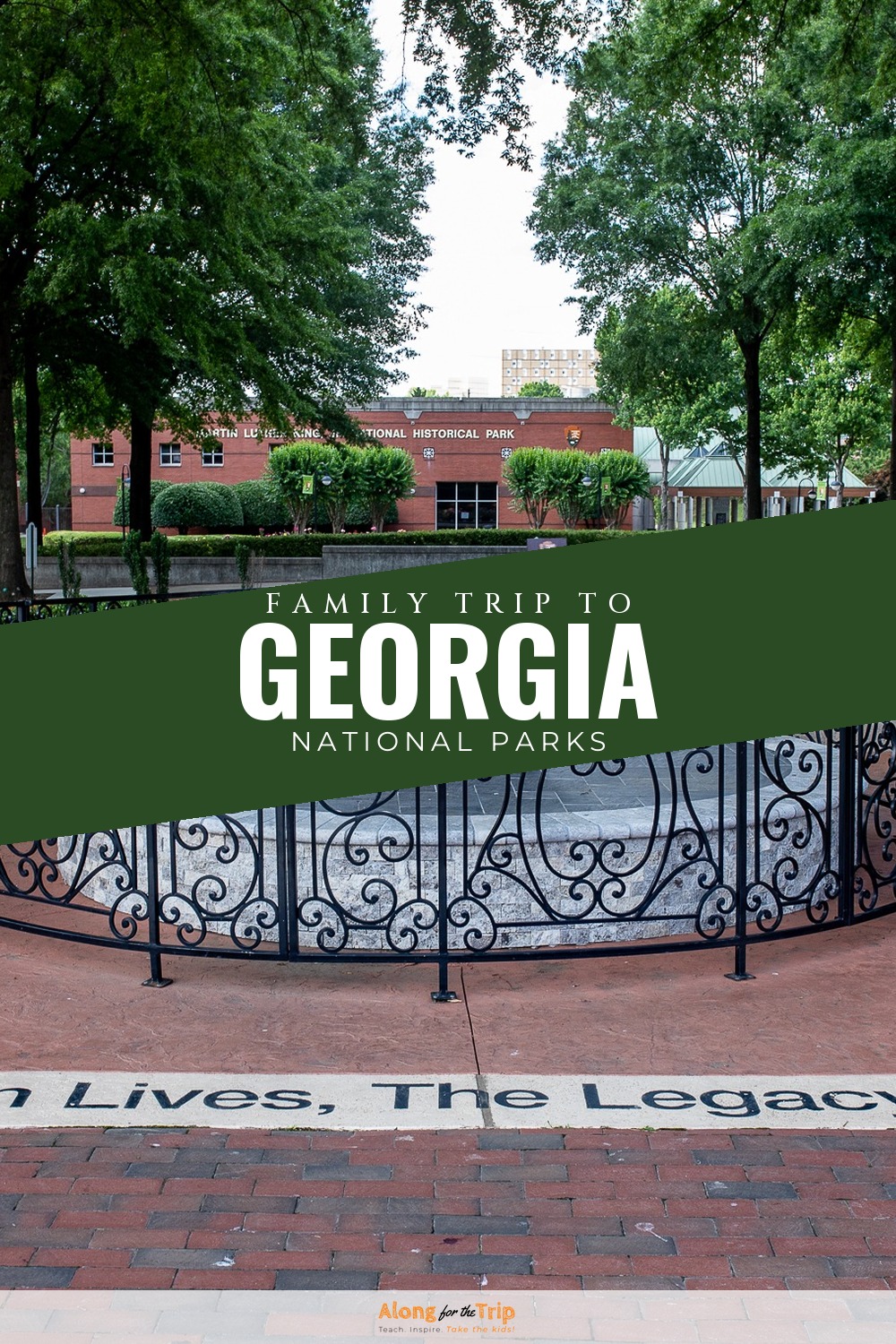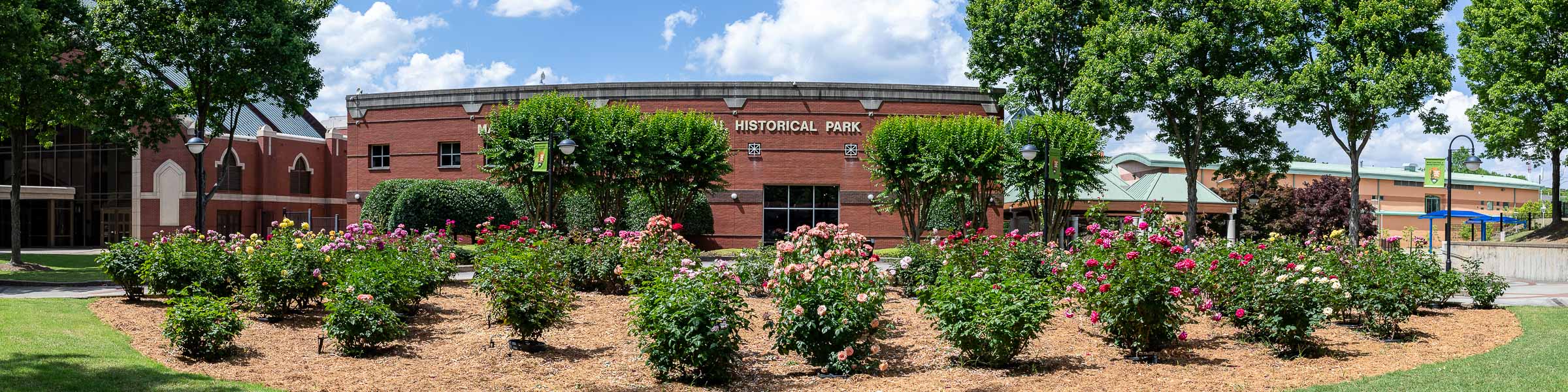
Martin Luther King National Historical Park, Georgia. All photography is ours.
Home/National parks/Georgia
Georgia National Parks
From Civil War to Civil Rights, Georgia has a lot to explore and learn about. Come #FindYourPark in Georgia.
National parks guide · Updated October 2026
Every NPS site in Georgia
11
National Park Service sites in Georgia
There are 11 National Park Service sites in Georgia: three national historical parks, two national monuments, a national historic site, a national scenic trail, a national recreation area, a national military park, a national seashore, and a national battlefield park. Tap any of them to jump to its details.
At a glance
We’ve been · 1 of 11
Affiliated sites · 4
0national parks
No national parks in Georgia yet
We’ve beenNot yet
National Park Service sites 11
Andersonville National Historic Site
Andersonville National Historic Site preserves the site of the former Camp Sumter, a Confederate prisoner-of-war camp during the American Civil War. Established in 1970, the park commemorates the history of the camp, which held Union prisoners from 1864 to 1865. Visitors can explore the National Prisoner of War Museum, which features exhibits and displays that provide insights into the experiences of prisoners of war throughout American history, not just during the Civil War. The site also includes a reconstructed section of the prison, where visitors can see the stockade walls and gain a sense of the camp’s living conditions.
Guests can also explore the Andersonville National Cemetery, which is the final resting place for thousands of Union soldiers who perished in the camp. Ranger-led programs, guided tours, and special events offer visitors opportunities to learn about the history and significance of Andersonville.
Appalachian National Scenic Trail
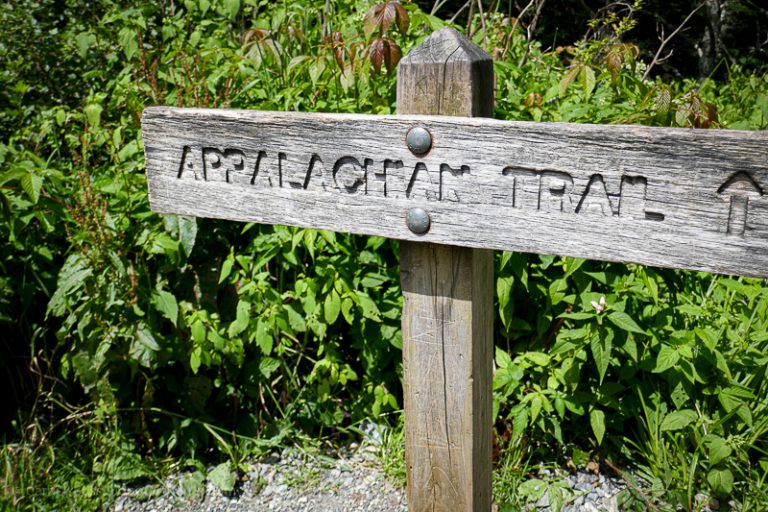
One of America’s most famous trails, the Appalachian National Scenic Trail stretches nearly 2,200 miles and runs nearly the entire length of the eastern United States from Maine to Georgia. The trail was constructed by private citizens and completed in 1937. Today, it is maintained by several federal and state agencies, as well as volunteer groups.
Chattahoochee River National Recreation Area
Chattahoochee River National Recreation Area traces the course of the Chattahoochee River near Atlanta, Georgia. Established in 1978, this national recreation area serves as an urban sanctuary, offering a tranquil escape from the bustling cityscape while celebrating the ecological and historical significance of the Chattahoochee River. The park’s history is deeply rooted in the preservation and conservation of this vital waterway, which played a critical role in the growth and development of the region.
The park features an extensive network of hiking trails and the river is ideal for water-based activities such as fishing, kayaking, and canoeing. Visitors can also stop by the park’s visitor center at Island Ford and join ranger-led activities.
Chickamauga and Chattanooga National Military Park
Chickamauga (pronounced chick-uh-MAW-guh) & Chattanooga National Military Park became the very first National Military Park in the country, and was authorized by Congress in 1890. The Park tells the stories of these two pivotal battles in the American Civil War that were fought in 1863. While the Confederacy won the first in Chickamauga, the Union won a decisive victory at Chattanooga.
Chattanooga served as a critically important supply line to the Confederate Army because of its proximity to the Tennessee River, and by capturing it, the North was able to severely cripple the South’s ability to restock. Considered the “Gateway to the Deep South,” Chattanooga was a prize whose importance Abraham Lincoln understood. After Chattanooga finally succumbed to the North, a Confederate soldier famously wrote, “This…is the death-knell of the Confederacy”.
The headquarters for the Chickamauga & Chattanooga National Military Park is located at Chickamauga Battlefield in Fort Oglethorpe, GA. The Visitor Center here has many Civil War era artifacts and exhibits as well as the Fuller Gun Collection, one of the finest collections of small arms in the country. The Lookout Mountain Battlefield Visitor Center is located in Lookout Mountain, TN.
Cumberland Island National Seashore
Cumberland Island National Seashore is a pristine natural wonder with a rich history dating back centuries. In the 16th century, Spanish soldiers and friars came to the island and built a mission and a fort. Later, it became a site of agriculture, with plantations established in the late 1700s and worked by enslaved people. In the 1880s, the Carnegie family built their Dungeness estate there as a winter retreat. Today, Cumberland Island remains a protected national seashore, preserving its history and the beauty of its diverse ecosystems.
There are a variety of activities to enjoy including the island’s pristine beaches, hiking, or touring the ruins of Dungeness, Plum Orchard, and other historic structures. Camping, birdwatching, and wildlife observation are also popular activities, as Cumberland Island is home to a diverse range of wildlife, including feral horses that roam freely throughout the island.
Watersports are also popular here. Visitors can navigate the island’s intricate waterways, salt marshes, and tidal creeks by kayak or paddleboard, further exploring this island.
Fort Frederica National Monument
Fort Frederica National Monument is significant in that it was established by the British in 1736 to defend the southern boundary of the British colony of Georgia against Spanish invaders from Florida. Under the leadership of General James Oglethorpe, Fort Frederica played a pivotal role in the struggle for control of the Southeast during the 18th century. The fort’s history is closely tied to the story of early colonial Georgia, as it served as a military stronghold and a thriving settlement that included a diverse community of English, Scottish, and German settlers.
Begin at the visitor center for informative exhibits, artifacts, and audiovisual presentations that provide insights into the fort’s historical significance. Guests can also explore the well-preserved ruins of Fort Frederica itself, offering a glimpse into the layout and structure of the fort, as well as the lifestyles of the people who lived there. Guided tours are available, providing in-depth historical context and stories about the fort’s role in the colonial era. Hiking and birdwatching are popular here as well, and St. Simons Island’s beaches are nearby.
Fort Frederica National Monument is located on St. Simons Island, Georgia and was established as a national monument on May 26, 1936, by President Franklin D. Roosevelt.
Fort Pulaski National Monument
Fort Pulaski National Monument is located on Cockspur Island in Georgia and is recognized for playing a significant role in the American Civil War. The fort was constructed in the mid-19th century and named after the Polish cavalry officer, Kazimierz Pułaski, who had fought in the American Revolutionary War. Its strategic location on the Georgia coast made it a vital point of defense, but during the Civil War, the fort came under siege by Union forces in 1862. The ensuing battle, which featured advanced rifled artillery, marked a turning point in military history and the effectiveness of traditional brick fortifications. Today, Fort Pulaski stands as a well-preserved testament to this turbulent period.
The Fort is renowned for its architectural and engineering marvels of its era, including drawbridges, moats, and sturdy brick walls. Inside the fort, visitors can discover exhibits and displays that provide an in-depth look at the Civil War history and the technology used in the siege. Guided tours are available, shedding light on the fort’s role in the war and the events that unfolded there. The nearby Cockspur Island Lighthouse is another historic site that visitors can explore.
Fort Pulaski National Monument was established as a national monument on October 15, 1924, by President Coolidge.
Jimmy Carter National Historical Park
The Jimmy Carter National Historical Park is a testament to the life and legacy of the 39th President of the United States, Jimmy Carter. This site is situated in Plains, Georgia, where Jimmy Carter grew up and later returned after his presidency. It encompasses several key locations that played a significant role in his life, including his childhood home, the Plains High School, and the Plains Train Depot, which served as his 1976 presidential campaign headquarters.
Guests can enjoy guided tours of President Carter’s childhood home, explore the Plains High School visitor center and museum showcasing the achievements and humanitarian efforts of President Carter and his wife, and visit the Plains Train Depot, which has exhibits on his 1976 presidential campaign.
The Jimmy Carter National Historical Park was established as a National Historic Site on December 23, 1987 by President Reagan. It was redesignated a National Historical Park in 2021.
Kennesaw Mountain National Battlefield Park
Kennesaw Mountain National Battlefield Park commemorates one of the most significant battles of the American Civil War. The park, located in Kennesaw, Georgia, preserves the site of the Battle of Kennesaw Mountain, a pivotal engagement in the Atlanta Campaign of 1864.
The park boasts an extensive network of hiking trails, some of which lead to the summit of Kennesaw Mountain, offering commanding views of the surrounding landscape. The visitor center provides historical context, exhibits, and audiovisual presentations that illuminate the events leading up to and during the battle. Guided tours are available, led by Park Rangers who share the story of the battle, its impact on the Civil War, and the experiences of the soldiers who fought there.
In addition to exploring the battlefield, visitors can partake in educational programs, living history demonstrations, and special events that provide a deeper understanding of the Civil War era. Picnicking and birdwatching are also popular activities within the park.
Kennesaw Mountain National Battlefield Park was designated as a national battlefield on June 26, 1935 by President Franklin D. Roosevelt.
Martin Luther King, Jr. National Historical Park

Martin Luther King Jr. National Historical Park was first established as a National Historic Site on October 10, 1980 during President Carter’s administration. It became a National Historical Park in 2018 and stands as a hallowed ground dedicated to the life and legacy of one of the most influential figures in American history. Located in Atlanta, Georgia, this park preserves the birthplace, childhood home, and final resting place of Dr. Martin Luther King, Jr. The park is a tribute to his tireless efforts in advancing civil rights and his leadership in the fight against racial segregation and discrimination in the United States.
Visitors to the Martin Luther King Jr. National Historical Park can embark on a powerful journey through the life and times of Dr. King. The childhood home of Martin Luther King, Jr. is open to the public, offering guided tours that provide insight into his early years and the influence of his family in shaping his commitment to justice. The historic Ebenezer Baptist Church, where Dr. King preached alongside his father, is also part of the park and is open for tours. The congregation now holds Sunday services in its newer sanctuary across the street. The King Center for Nonviolent Social Change, located adjacent to the park, serves as a repository of Dr. King’s papers and a center for education and research in nonviolent social change. It houses a moving memorial crypt where both Dr. King and his wife, Coretta Scott King, are interred, offering a place for reflection and tribute.
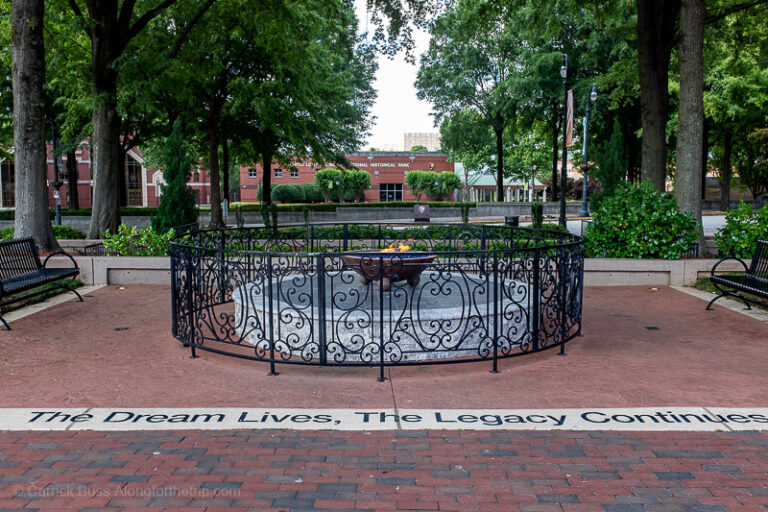
The historical park frequently hosts events and programs that celebrate Dr. King’s life, teachings, and the broader civil rights movement. The “I Have a Dream” World Peace Rose Garden, the International Civil Rights Walk of Fame, and the reflecting pool add to the park’s significance as a place of remembrance and reflection. The park stands as a living monument to the enduring spirit of Dr. Martin Luther King, Jr., and his unwavering dedication to equality and justice, providing visitors with an opportunity to connect with the legacy of one of the most influential figures in American history.
Read more about visiting Martin Luther King Jr. National Historical Park here.
Ocmulgee Mounds National Historical Park
Ocmulgee (pronounced ohk-MUL-gee) Mounds National Historical Park recognizes the rich cultural history of Native American peoples in the southeastern United States. Located in Macon, Georgia, the park encompasses a vast area that has been inhabited for over 12,000 years. It preserves the remains of major earthworks and mounds constructed by indigenous cultures, including the Mississippian people, who lived in the region from around 900 to 1100 AD.
The park features well-preserved mounds, including the Great Temple Mound, which is the centerpiece of the site and once served as the ceremonial and political center of the Mississippian culture. The park’s visitor center offers exhibits and educational programs that provide insights into the lives, traditions, and artwork of the Native American populations that called this area home. The Ocmulgee Heritage Trail allows visitors to explore the diverse ecosystems and natural beauty of the park while connecting to various archaeological sites. Guests can also enjoy cultural events, workshops, and festivals that celebrate the heritage and traditions of Native American communities. The annual Ocmulgee Indigenous Celebration each September is a major highlight, showcasing traditional dance, music, crafts, and food.
Ocmulgee Mounds National Historical Park was first established as Ocmulgee National Monument on December 23, 1936 by Franklin D. Roosevelt. It became a National Historical Park in 2019.
Partners of the Park Service
NPS-affiliated sites in Georgia
These sites aren’t run by the National Park Service, but they’re part of the NPS family through national trails and heritage areas.
Arabia Mountain National Heritage Area
Established in 2006, Arabia Mountain National Heritage Area celebrates the unique landscapes, culture, and history of the Arabia Mountain region. It is named after Arabia Mountain, a massive granite outcrop that has played a central role in the region’s history. The heritage area encompasses a diverse array of ecosystems, from rock outcroppings to wetlands, which provide a habitat for a wide variety of plant and animal species.
Hiking and exploring the numerous trails is a popular activity, along with bird-watching, photography, and wildlife observation. There are also opportunities to explore several historic sites and buildings like Vaughters’ Farm, a historic dairy farm with a preserved barn. Educational programs and interpretive centers provide insights into the cultural and historical significance of the area.
Arabia Mountain National Heritage Area encompasses around 40,000 acres and is just east of Atlanta, GA.
Augusta Canal National Heritage Area
Augusta Canal National Heritage Area, situated in Augusta, Georgia, preserves and interprets the history of the Augusta Canal, one of America’s earliest and most successful industrial canals. The canal was constructed in 1845 to harness the waterpower of the Savannah River for textile manufacturing and was instrumental in the development of the region’s cotton and textile industries. It stands as a testament to the ingenuity and innovation of the era.
Visitors can enjoy informative exhibits and guided tours including canal boat tours, which offer a unique perspective on the waterway and its surroundings. The towpath along the canal is ideal for walking, jogging, and cycling, providing opportunities for outdoor recreation and scenic views of the water and historic structures.
Augusta Canal National Heritage Area was designated in 1996.
Gullah Geechee Cultural Heritage Corridor
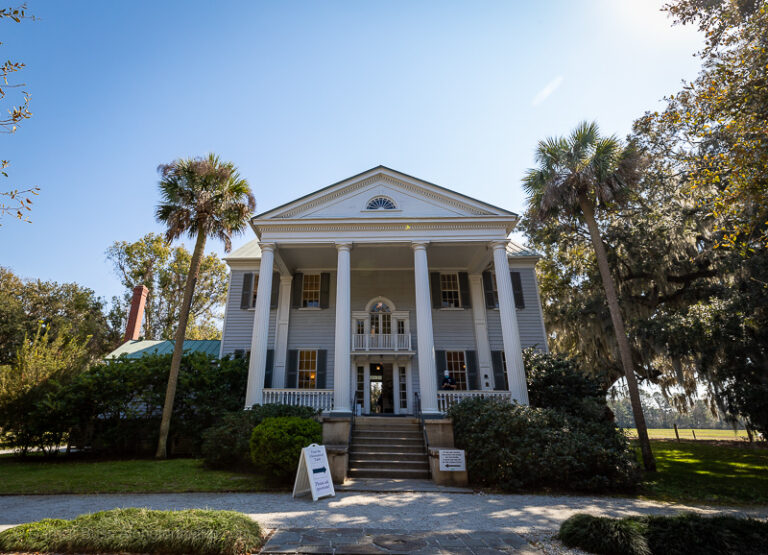
The Gullah Geechee Cultural Heritage Corridor stretches along the eastern seaboard from Wilmington, North Carolina to Jacksonville, Florida, and celebrates the culture of African descendants brought from West Africa amid the slave trade to work the fields along the Atlantic Coast. Rice, indigo, and Sea Island Cotton plantations relied on slave labor of the Gullah Geechee to become rich and to produce crops for export. Since many of these plantations existed on barrier islands or were otherwise isolated from the mainland, the Gullah Geechee people retained much of their cultural identity and today their traditions, arts and crafts, and ways of life are still uniquely African.
The Gullah Geechee Cultural Heritage Corridor was designated by Congress in 2006. Like other heritage corridors, the National Park Service works in conjunction with local, city, and state governments to protect and preserve the Gullah Geechee heritage. Visit the official Gullah Geechee Cultural Heritage Corridor website here for more information.
Trail of Tears National Historic Trail
The Trail of Tears National Historic Trail commemorates the forceful removal of the Cherokees from their homes in Georgia, Tennessee, Alabama, and North Carolina to Indian Territory in Oklahoma. States participating in the Trail are Alabama, Arkansas, Georgia, Illinois, Kentucky, Missouri, North Carolina, Oklahoma, and Tennessee. More than 16,000 Cherokee were relocated between 1838 and 1839, and the trail documents their stories of suffering, illness, and death, but also preserves their routes and important sites along the Trail.
Good to know
Georgia national parks questions
No. Georgia doesn’t have a national park, but it does have 11 National Park Service sites, including Andersonville National Historic Site, Appalachian National Scenic Trail, and Chattahoochee River National Recreation Area.
There are 11 NPS sites in Georgia: three national historical parks, two national monuments, a national historic site, a national scenic trail, a national recreation area, a national military park, a national seashore, and a national battlefield park. Four more NPS-affiliated sites, like Arabia Mountain National Heritage Area, round out the list.
So far we’ve visited Martin Luther King, Jr. National Historical Park and Gullah Geechee Cultural Heritage Corridor.
Keep exploring
National parks in nearby states
There’s more to explore in these nearby states.