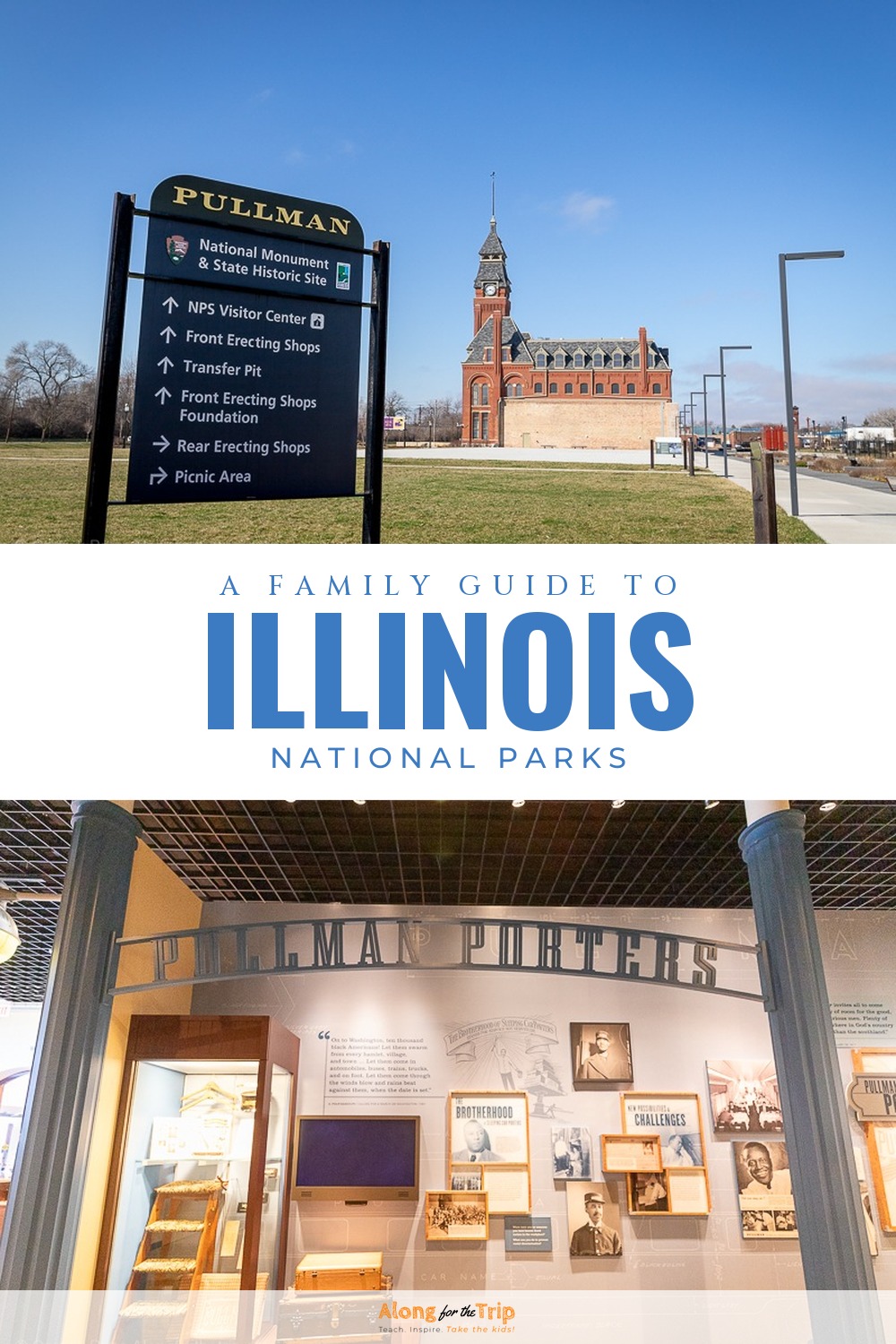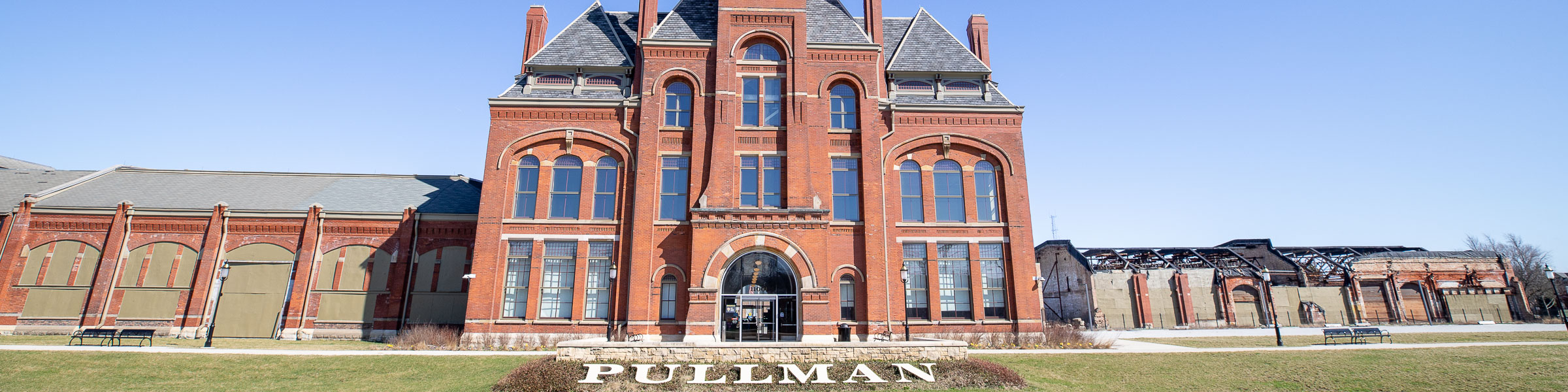
Pullman National Historical Park, Illinois. All photography is ours.
Home/National parks/Illinois
Illinois National Parks
The National Parks of Illinois highlight some of America’s most beloved Presidents and cities. Come explore the “Land of Lincoln” and #FindYourPark in Illinois.
National parks guide · Updated October 2026
Every NPS site in Illinois
5
National Park Service sites in Illinois
There are five National Park Service sites in Illinois: two national monuments, two national historic sites, and a national historical park. Tap any of them to jump to its details.
At a glance
We’ve been · 1 of 5
Affiliated sites · 7
0national parks
No national parks in Illinois yet
We’ve beenNot yet
National Park Service sites 5
Emmett Till and Mamie Till-Mobley National Monument
The Emmett Till and Mamie Till-Mobley National Monument tells the story of the tragic events that led to the lynching of 14-year-old Emmett Till in Mississippi in 1955. Till’s murder and his subsequent open-casket funeral in Chicago at the request of his mother brought national attention and were a catalyst for the Civil Rights Movement in America.
The Emmett Till and Mamie Till-Mobley National Monument consists of three sites, two in Glendora and Sumner, Mississippi, and one in Chicago, Illinois. While the park is being developed, visitors can learn more at the Emmett Till Interpretive Center in Sumner, MS, and also the Roberts Temple Church of God in Christ in Chicago’s South Side.
Lincoln Home National Historic Site
The Lincoln Home National Historic Site in Springfield, Illinois, encompasses a four-block area that includes Abraham Lincoln’s home on the corner of Eighth and Jackson streets, and other historical sites and landmarks that help tell the story of America’s sixteenth President. Tours of the home are free, but tickets are on a first-come, first-served basis and are limited. Several rooms in the house are available to see on the tour including the Formal Parlor, Dining Room, Abraham Lincoln’s Bedroom, and the Kitchen.
In addition to the Lincoln Home, there are several other period homes to visit in the ‘neighborhood,’ along with an heirloom garden, the Jameson Jenkins lot, one of the sites of the Underground Railroad, and other exhibits. In the Visitor Center, guests can enjoy a short film about Lincoln, and at various times throughout the warmer months, guests can enjoy a living history demonstration. The Visitor Center is open all year, as are tours of the home.
Other nearby sites of note are Lincoln’s Tomb, where he along with his wife Mary and three of their children are buried (a State Historic Site and National Historic Landmark), and the Abraham Lincoln Presidential Museum & Library which is only a few blocks away. The Lincoln Home was designated a National Historic Site in 1971.
New Philadelphia National Historic Site
New Philadelphia National Historic Site acknowledges the first US town platted and registered by an African American. The town was registered by Free Frank McWorter who founded New Philadelphia in 1836 in rural western Illinois. New Philadelphia was established as a National Historic Site on December 29, 2022, and the National Park Service now maintains it along with Lincoln Home National Historic Site. The site is still being developed and has no visitor center yet, so the New Philadelphia Association is a good place to learn more.
Pullman National Historical Park
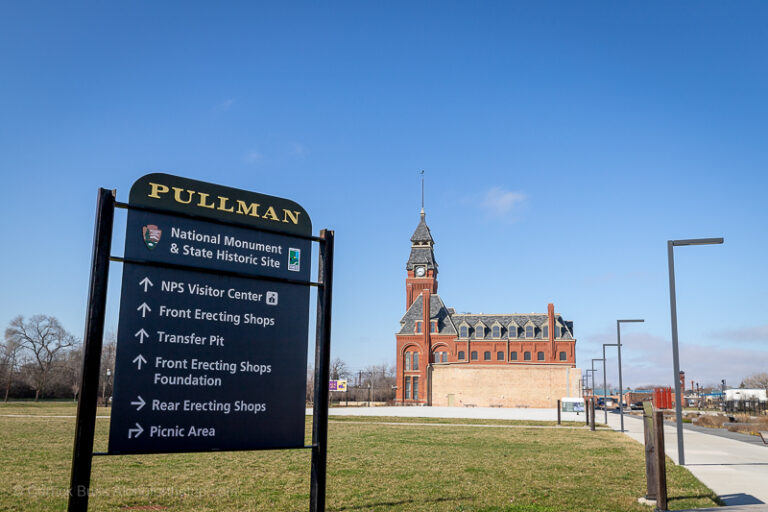
Pullman National Historical Park is the first National Park Service unit in Chicago, and it tells the story of George Pullman of sleeper car fame and the planned industrial community he founded to facilitate his business. The park protects several buildings in Chicago’s Pullman district such as the Pullman Palace Car Works factory and administration building, the Hotel Florence, Arcade Park, and the Greenstone Church. Uniquely ornate industrial buildings are the hallmark of Pullman, and everything was planned, including a large lake which served as both something pretty to look at and a cooling reservoir for the factory’s steam engine. The lake was later filled in and no longer exists.
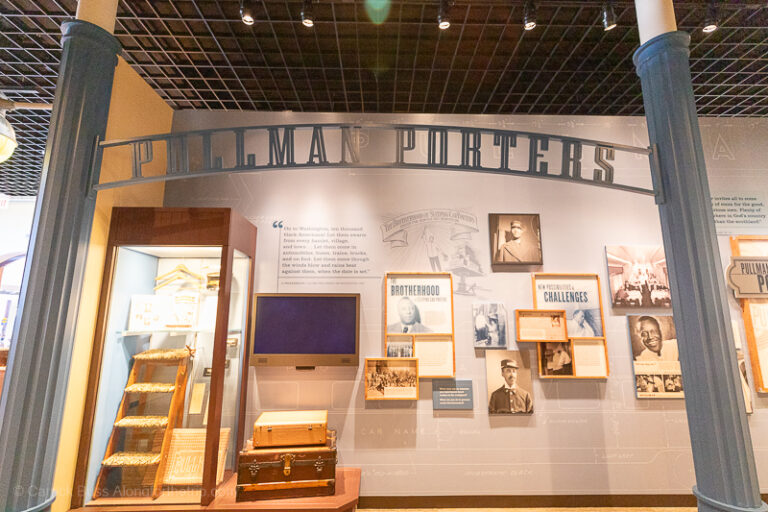
The site is also home to The National A. Philip Randolph Pullman Porter Museum. The purpose of the Museum is to “promote, honor and celebrate the legacy of A. Philip Randolph, Pullman Porters, the Brotherhood of Sleeping Car Porters and contributions made by African-Americans to America’s labor movement; with a significant focus on the African American Railroad Employee.” Pullman was the largest employer of African Americans in the United States at the time, and the Porters working for Pullman made up forty percent of its workforce. A. Philip Randolph was a labor organizer and founded the Brotherhood of Sleeping Car Porters (BSCP) which was the first African-American-led labor organization to receive a charter from the American Federation of Labor (AFL).
The site is open all year except for major holidays. Stop by the Visitor Center to grab a self-guided tour map before you start exploring, or sign up for a Ranger-Guided tour. Pullman was designated a national monument by President Barack Obama on February 19, 2015, and it is now a National Historical Park.
Springfield 1908 Race Riot National Monument
Springfield 1908 Race Riot National Monument tells the story of three days of violence in August 1908, when a large White mob attacked Springfield’s Black community. The mob burned Black homes and businesses and lynched two Black men. The riot happened just blocks from Abraham Lincoln’s home, and the shock of it helped lead to the founding of the NAACP the following year.
This is one of the newest national parks, and it became a national monument in 2024. There are no facilities yet, and none of the old neighborhood is still standing. You can view the site from the south end of the HSHS St. John’s Hospital Women & Children’s Clinic parking lot. Passport stamps are available nearby at Lincoln Home National Historic Site.
Partners of the Park Service
NPS-affiliated sites in Illinois
These sites aren’t run by the National Park Service, but they’re part of the NPS family through national trails and heritage areas.
Abraham Lincoln National Heritage Area
Designated in 2008, the Abraham Lincoln National Heritage Area works alongside the Lincoln Home National Historic Site and is the only National Heritage Area named after a United States President. The Heritage Area encompasses 43 counties in Illinois and works with local groups, agencies, organizations, and individuals to help share the life of Abraham Lincoln and his influence on Central Illinois. It includes the Lincoln Log Cabin State Historic Site, the Lincoln Heritage Museum, the Abraham Lincoln Presidential Library and Museum, and many other points of interest. Discover more about the Abraham Lincoln National Heritage Area on their official site here.
Chicago Portage National Historic Site
The Chicago Portage describes a natural divide between the Great Lakes and the Mississippi River that has been used for centuries by Native Americans, early explorers, and European settlers. It has been called one of the most important travel routes of the mid-continent and has served an important role in the development of the American interior. Part of the site – the Illinois and Michigan Canal – was designated America’s first National Heritage Corridor.
While it still serves an important economic role to the area, visitors today can enjoy several activities like hiking, cross-country skiing, birding, or exploring several miles of trail system. For a list of activities and events, visit their website here.
Illinois & Michigan Canal National Heritage Area
The Illinois and Michigan Canal National Heritage Area (I & M Canal for short) was the first of its kind in America and was designated in 1984. The canal itself is 96 miles long, and it opened in 1848. The hand-dug canal connected mid-continent cities to New York Harbor and New Orleans. The canal was crucial for shipping goods throughout the Midwest and allowed Chicago to boom economically.
While the canal officially closed to commerce in 1933, it still serves its communities as a transportation route and a recreational area. Several points of interest can be found along the corridor, like the Gaylord Building in Lockport, the Midewin National Tallgrass Prairie, and the I&M Canal Visitor Center and Boat. If you like to participate in the National Park Passport program, several stamps can be found along the corridor at various visitor centers and sites. Be sure to visit the I&M Canal website for locations and more information.
Lewis & Clark National Historic Trail
The Lewis & Clark National Historic Trail marks the historic journey by Meriwether Lewis and William Clark along 4,900 miles of wilderness from Pennsylvania all the way to the mouth of the Columbia River in Oregon. The Trail connects 16 states – Pennsylvania, Ohio, West Virginia, Kentucky, Indiana, Illinois, Missouri, Kansas, Nebraska, Iowa, South Dakota, North Dakota, Montana, Idaho, Washington, and Oregon – and includes museums, landmarks, exhibits, and Visitor Centers along the route. For a complete list of markers and things to see and do, click here.
Mormon Pioneer National Historic Trail
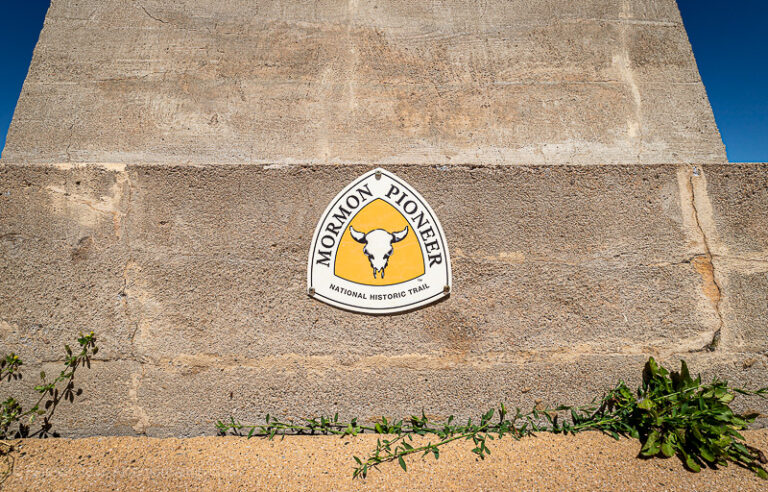
The Mormon Pioneer National Historic Trail marks the path taken by the Mormon Pioneers led by Brigham Young on their journey from Illinois to Utah, beginning in 1846. On July 24, 1847, Brigham Young arrived in what is now Salt Lake City, Utah, to begin a new life with his fellow Mormons.
The 1,300-mile route begins in Nauvoo, Illinois, and moves through the states of Iowa, Nebraska, Wyoming, and Utah. Modern-day auto routes with maps are available with many sites along the way for guests to visit. The Mormon Pioneer National Historic Trail was made part of the National Trails System on November 10, 1978.
Ronald Reagan Boyhood Home National Historic Site
The Ronald Reagan Boyhood Home National Historic Site in Dixon, Illinois, preserves the two-story home of America’s 40th President Ronald Reagan, who lived there from 1920 to 1923. The home is decorated with period furniture and has been restored to its original 1920 appearance. The home is listed on the National Register of Historic Places and is open to visitors generally from 10 a.m. to 4 p.m. An interpretive Visitor Center sits next door to the home. Congress authorized a National Historic Site here in 2002, but the federal government never acquired the home. Young America’s Foundation owns and operates it today.
Trail of Tears National Historic Trail
The Trail of Tears National Historic Trail commemorates the forceful removal of the Cherokees from their homes in Georgia, Tennessee, Alabama, and North Carolina to Indian Territory in Oklahoma. States participating in the Trail are Alabama, Arkansas, Georgia, Illinois, Kentucky, Missouri, North Carolina, Oklahoma, and Tennessee. More than 16,000 Cherokee were relocated between 1838 and 1839, and the trail documents their stories of suffering, illness, and death, but also preserves their routes and important sites along the Trail.
Good to know
Illinois national parks questions
No. Illinois doesn’t have a national park, but it does have five National Park Service sites, including Emmett Till and Mamie Till-Mobley National Monument, Lincoln Home National Historic Site, and New Philadelphia National Historic Site.
There are five NPS sites in Illinois: two national monuments, two national historic sites, and a national historical park. Seven more NPS-affiliated sites, like Abraham Lincoln National Heritage Area, round out the list.
So far we’ve visited Pullman National Historical Park and Mormon Pioneer National Historic Trail.
Keep exploring
National parks in nearby states
There’s more to explore in these nearby states.