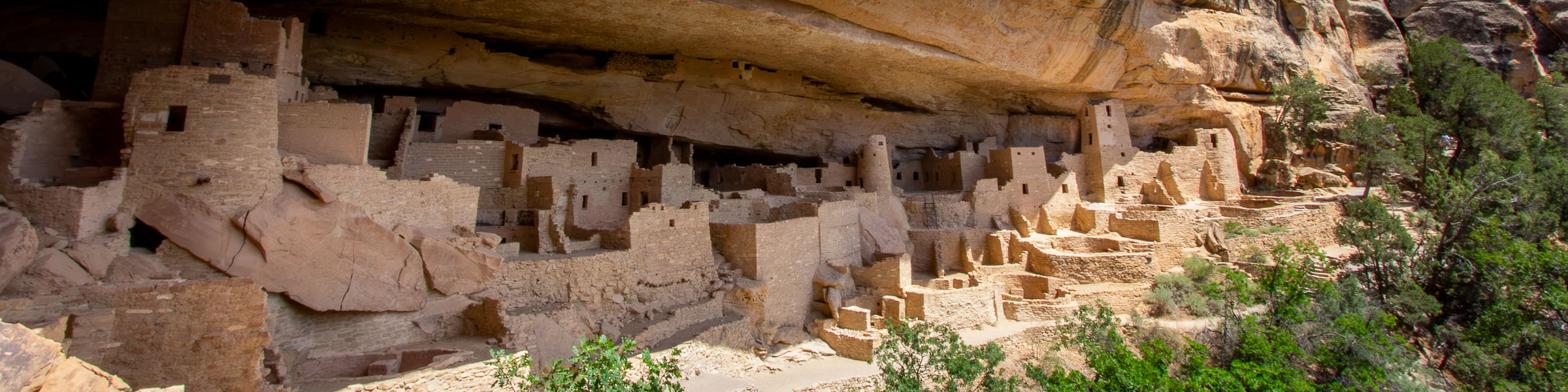
Mesa Verde National Park, Colorado. All photography is ours.
Home/National parks/Colorado
Colorado National Parks
Colorado’s National Parks provide one stunning view after another just about everywhere you look. Come #FindYourPark in Colorado.
National parks guide · Updated October 2026
Every NPS site in Colorado
13
National Park Service sites in Colorado
There are 13 National Park Service sites in Colorado: five national monuments, four national parks, three national historic sites, and a national recreation area. Tap any of them to jump to its details.
At a glance
We’ve been · 6 of 13
Affiliated sites · 8
We’ve beenNot yet
More National Park Service sites 9
Amache National Historic Site
The Amache (pronounced uh-MAH-chee) National Historic Site in Colorado preserves the memory of one of the ten incarceration camps where over 10,000 individuals, primarily of Japanese ancestry, were forcibly detained by the US government during WWII. Visitors to the site can explore the remains of the internment camp, including a reconstructed barrack, a restored recreation hall, a guard tower, a water tank, building foundations, and the cemetery. Interpretive exhibits and guided tours offer further context.
Amache was authorized by Congress in 2022 and formally established in February 2024. It shares management and some staff with Bent’s Old Fort National Historic Site, Capulin Volcano National Monument, and Sand Creek Massacre National Historic Site. These NPS sites are part of the High Plains Group headquartered at Bent’s Old Fort National Historic Site, near La Junta, Colorado.
Bent’s Old Fort National Historic Site
Located in east central Colorado along the Arkansas River and the Santa Fe National Historic Trail, Bent’s Old Fort National Historic Site is a reconstructed fur trading fort and outpost depicting life in the 1840s. The original fort was built in 1833 to facilitate trade with the Cheyenne and Arapaho Tribes.
Guided tours, character reenactments, demonstrations, and special events throughout the year are all part of the experience. Visitors can also visit the Park’s Western National Parks Bookstore for gifts and souvenirs. The site is open all year except on major holidays. Bent’s Old Fort National Historic Site was created by Congress in 1960 and includes about 800 acres.
Black Canyon of the Gunnison National Park
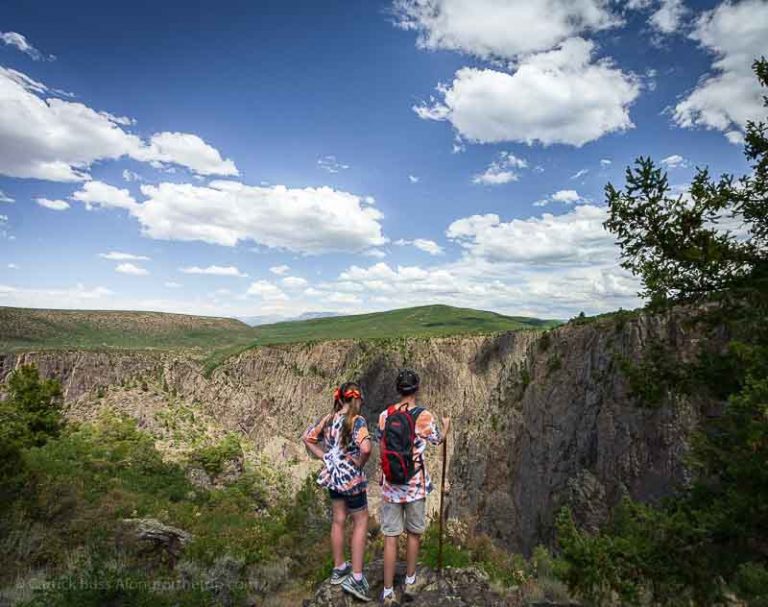
The phrase “steep and deep” comes to mind when describing Black Canyon. For millions of years, the Gunnison River has been persistently doing its work to carve out this canyon, and its features are staggering. Taking its name from the fact that very little light reaches parts of the Canyon, Black Canyon’s vertical landscape offers visitors a unique experience.
While the Grand Canyon is both deep and wide, Black Canyon is deep and narrow. At its deepest at Warner Point, the canyon is 2,722 feet deep, and at its narrowest, it’s just 40 ft. across at the Gunnison River, which is pretty incredible. Hiking, fishing, camping, and stargazing are popular activities at the park.
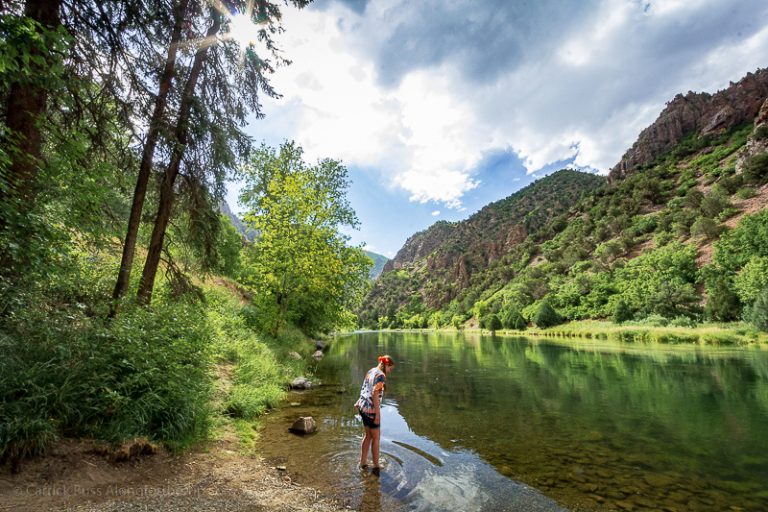
If you can, take a drive down to the river for an entirely different perspective. Visitors can also take a casual drive around the rim to various overlooks down into the canyon. Some of our favorites are Gunnison Point, Chasm View, Painted Wall, and Sunset View along the South Rim Road.
The South Rim Visitor Center is open all year except for Thanksgiving, Christmas, and New Year’s Day. Black Canyon of the Gunnison National Park was established by Congress in 1999. You might also want to visit nearby Colorado National Monument, which is less than two hours away by car, or check with Curecanti National Recreation Area to see if its boat tours into the canyon are running.
Colorado National Monument
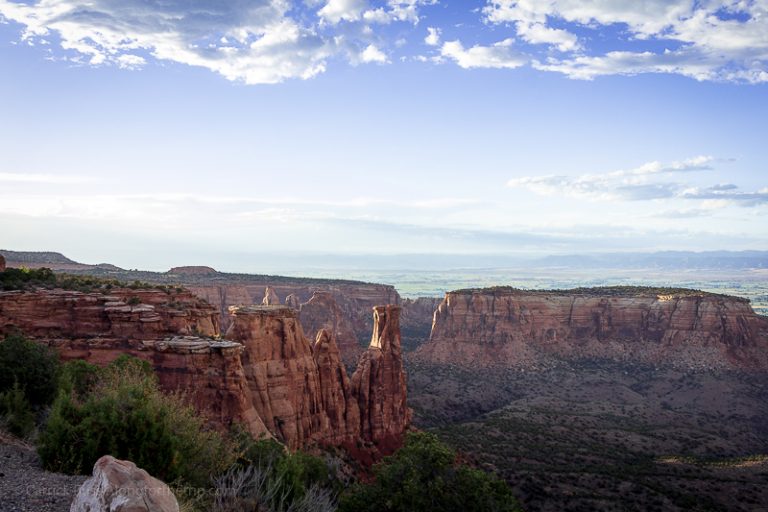
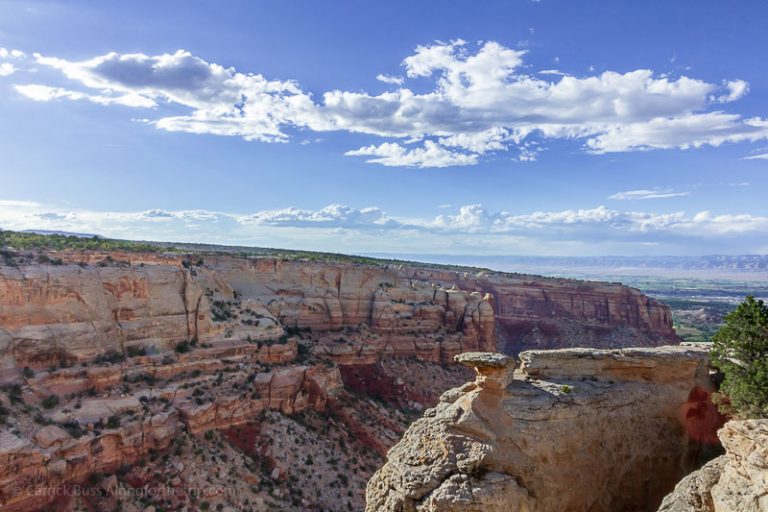
Colorado National Monument in far western Colorado was created in 1911 to protect and preserve one of the great landscapes on the Colorado Plateau. The most popular activity is driving the historic Rim Rock Drive through the park where you’ll have several opportunities to pull off and look down into the canyon at some of its most striking features like Independence Monument, the Kissing Couple, and Coke Ovens. If you visit in the evening, the setting sun catching the canyon walls is spectacular.
Other activities at the park include hiking, camping, cycling, and rock climbing. The park is close to other NPS sites like Black Canyon of the Gunnison National Park, Canyonlands National Park, Arches National Park, and Dinosaur National Monument. Colorado National Monument is open all year, but may close due to inclement weather, so be sure to check before you head to the park.
Curecanti National Recreation Area
Curecanti (pronounced kyoo-ruh-KAN-tee) National Recreation Area was created when the Gunnison River was dammed, creating three reservoirs. Camping, hiking, and boating are popular here, but the Area might be best known for its salmon and trout fishing. If it’s running, consider taking a Ranger-guided boat tour up to the Black Canyon to learn more about the incredible geology here. The tour has been suspended at times, so check its status before you go.
Dinosaur National Monument
In 1909, the first dinosaur fossils were found in the area, and by 1915, President Wilson had set aside 80 acres of the site as protected Dinosaur National Monument. In 1938, President Roosevelt expanded the Monument to include over 200,000 acres.
Today visitors can visit the famous Quarry Exhibit Hall, an enclosed space where you can gaze upon over 1,500 dinosaur bones, encompassing several different species. Take a drive through the park to view some of its impressive geologic features, hike, camp, fish, and even whitewater raft. One-day and multi-day guided rafting tours are available down the challenging Green and Yampa Rivers.
The Quarry Visitor Center is open from 8:00 a.m. – 6:00 p.m. during warmer months and 9:00 a.m. – 5:00 p.m. during winter. The Quarry Exhibit Hall is open at roughly the same times and is located a quarter-mile from the Visitor Center. During shuttle season, the road to the Quarry Exhibit Hall is closed to private cars, so you’ll ride the shuttle. At other times of year you can drive up yourself, so check the current schedule before you go.
Note that although the park spans both Colorado and Utah, there are no fossils on the Colorado side of the monument. They are all located on the Utah side. There is, however, a Visitor Center (the Canyon Visitor Center) that is open seasonally, spring through fall.
Florissant Fossil Beds National Monument
Florissant (pronounced FLOR-uh-sunt) Fossil Beds National Monument contains thousands of fossilized plants, animals, and even giant redwood trees, making it one of the most diverse fossil deposits on Earth. Several marked trails are available through the site for self-guided tours, while ranger-led interpretive walks and hikes are also available. Horseback riding is also an option in the park.
Florissant Fossil Beds National Monument was signed into law by President Nixon in 1969.
Great Sand Dunes National Park and Preserve
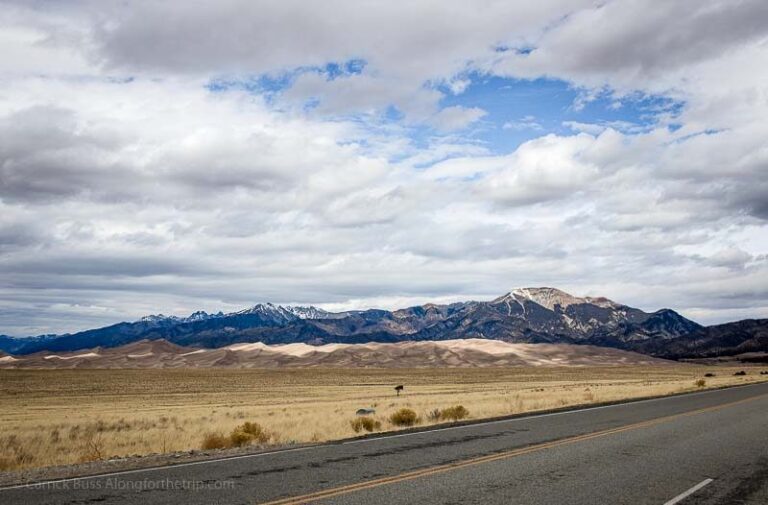
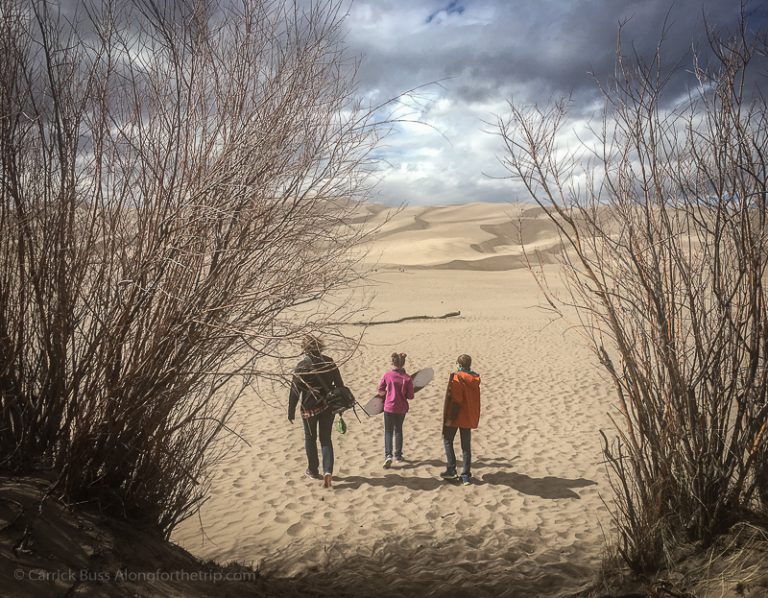
Great Sand Dunes National Park and Preserve is home to the tallest sand dunes in North America. With the Sangre de Cristo Mountains as a backdrop, this beautiful park is one of our favorites. Obviously, renting a sand board and sledding down the dunes is popular, but other activities include hiking and cooling off in Medano Creek in the spring and early summer when the snowmelt begins coming off the mountains.
If you’re planning to sand board, you can bring your own or rent them in town nearby, but the park does not rent or sell them. Other features of the park include its Dark Sky status. In 2019, the International Dark-Sky Association (now DarkSky International) certified the Park as an International Dark Sky Park. That helps protect it from light pollution and makes it one of the darkest places in Colorado for night-sky viewing.
Great Sand Dunes National Park and Preserve was originally designated as a National Monument in 1932 and then expanded in 2000 to add the Preserve. In 2004, it was redesignated as a National Park and Preserve encompassing 149,164 total acres.
Hovenweep National Monument
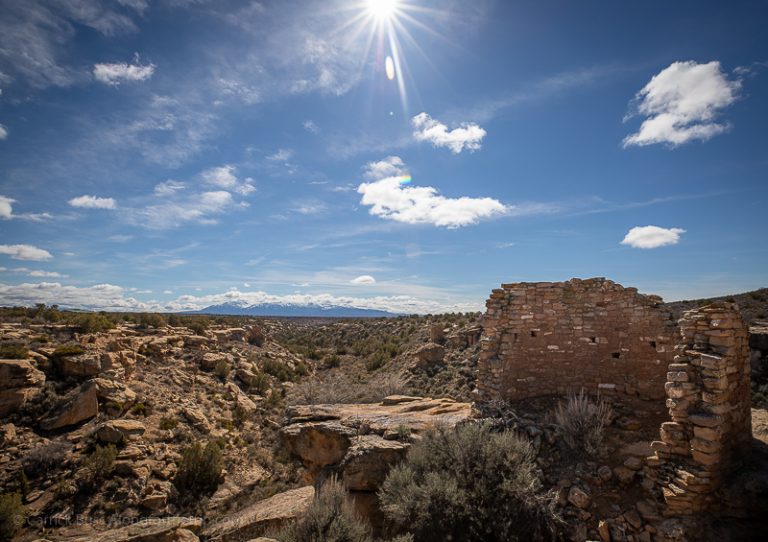
Hovenweep (pronounced HO-ven-weep) National Monument protects several ancient Puebloan sites dating from 1200 and 1300 A.D. The sites consist of many different kivas, or ceremonial areas, along with unique square and circular towers. At their peak, the sites were home to around 2,500 ancient Puebloans. President Harding proclaimed Hovenweep a National Park Unit in 1923.
Hovenweep National Monument is open year round to visitors, and other popular activities include hiking, camping, and stargazing.
Mesa Verde National Park
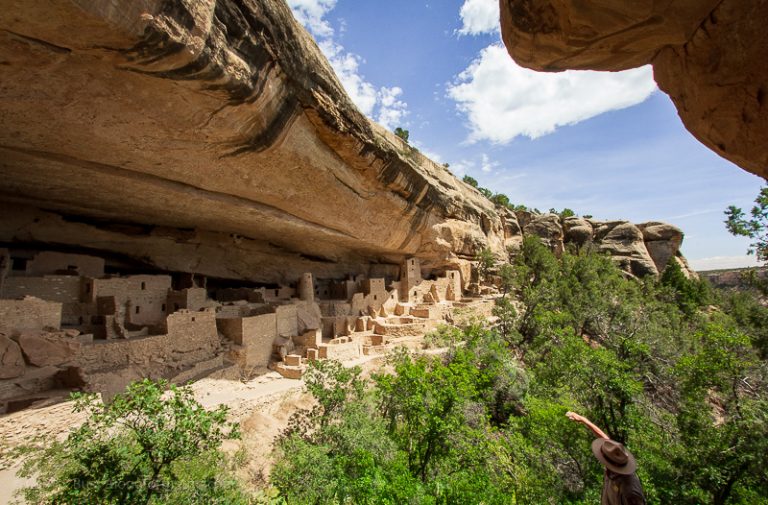
Mesa Verde National Park was established in 1906 by President Theodore Roosevelt and is one of the largest and best preserved ancient Puebloan sites anywhere. For more than 700 years, the ancestral Pueblo peoples made Mesa Verde their home from about A.D. 550 to 1300, and the cliff dwellings they left behind are a testament to their ingenuity and skill.
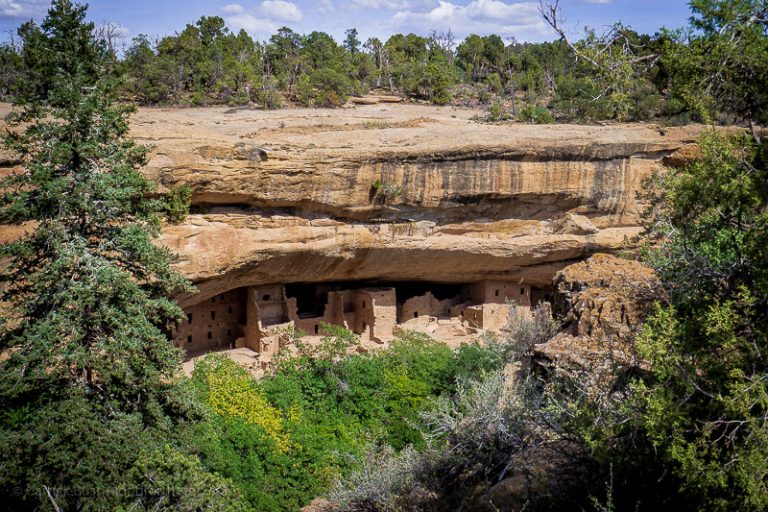
Tours of the sites are available, but are very popular, so book in advance to make sure you get the tour you want. Balcony House, Cliff Palace, and Long House are the most popular and offer visitors an up-close view of the sites and structures. Other sites around Mesa Verde include Step House, Sun Temple, and Badger House Community, along with several other sites. Spruce Tree House is closed to entry, but you can still see it from the overlooks.
Mesa Verde National Park was named one of the very first World Heritage Sites by UNESCO in 1978. Yellowstone National Park was the only other site in the United States named in that inaugural year. Yucca House National Monument is also nearby.
Rocky Mountain National Park
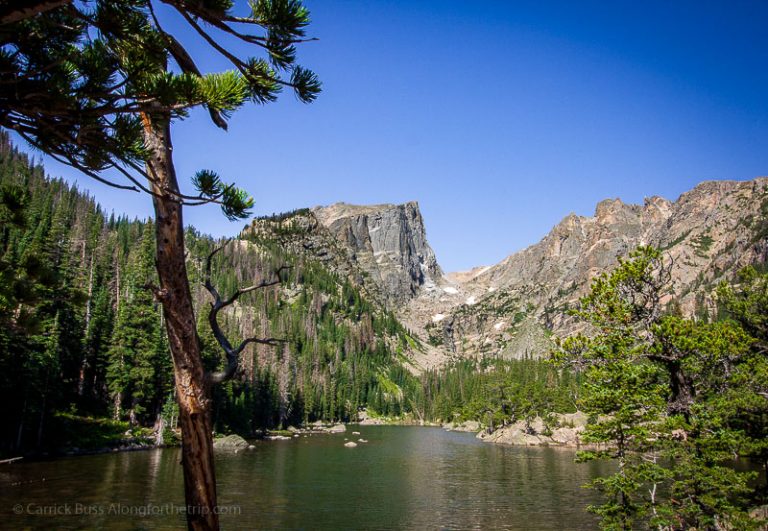
Rocky Mountain National Park is a place of superlatives. The mountains are immense, the beauty staggering, and the alpine lakes are as clear as crystal. Created in 1915, the Park protects 265,807 acres of land, much of which is designated wilderness area. Hiking, camping, fishing, backpacking, and wildlife viewing are all popular here. Another landmark in the Park is the Continental Divide, which can easily be visited.
In the summer, make sure you take a drive across the park on Trail Ridge Road. It’s the highest continuous paved road in the United States and tops out at 12,183 ft. Although Trail Ridge Road is closed in winter, the Park is still a beautiful place to explore, and there are plenty of winter activities to participate in.
Rocky Mountain National Park is a busy one, hosting more than 4 million visitors per year. If you plan on taking some of the popular hikes through the Park like Emerald Lake, Bierstadt Lake, or Fern Lake, get up early! From late May through mid-October, the Park also requires a timed-entry reservation, and many of these trailheads need a separate Bear Lake Road reservation. The parking lots will fill very early, and you’ll need to ride on one of the Park’s free shuttles to the trailheads, which can take some time in the busier summer months.
Rocky Mountain National Park has 20 peaks over 13,000 ft. including Longs Peak at over 14,000 ft., 147 lakes, and was named a UNESCO Biosphere Reserve in 1976.
Sand Creek Massacre National Historic Site
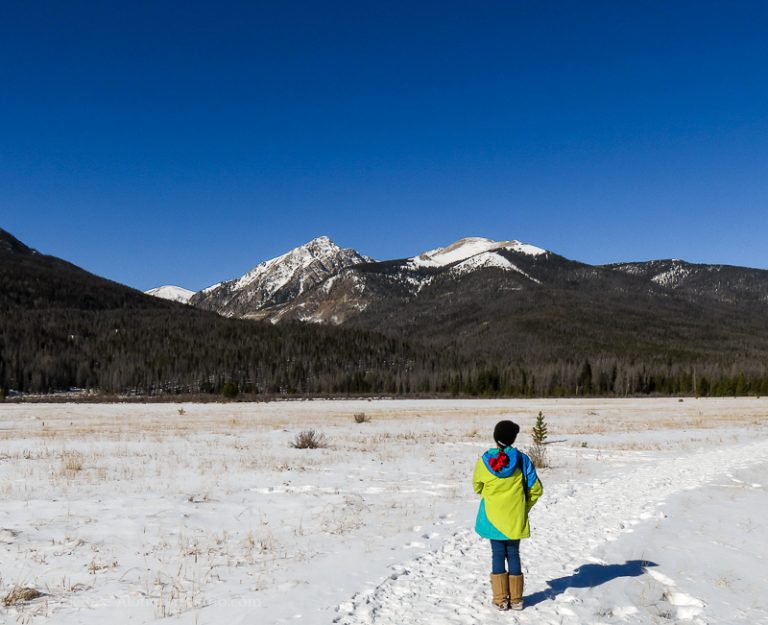
On November 29, 1864, Colonel John M. Chivington led an attack on a Cheyenne and Arapaho Indian village along Sand Creek in southeastern Colorado Territory. His 675 soldiers massacred nearly 230 people – mostly women, children, and the elderly. Firsthand accounts of the massacre were found in 2000 in Denver, describing the events and the moral resistance many soldiers had with the attack.
Colonel Chivington resigned from the Army in disgrace after the massacre. Visitors to the site can take an interpretive walk with a Ranger, explore the battlefield, monument, and Repatriation Area, and enjoy the scenery of the High Plains along the trails.
Sand Creek Massacre National Historic Site was established by Congress in 2000 and opened to the public in 2007.
Yucca House National Monument
Yucca House National Monument is one of the largest archeological sites in southwest Colorado and protects an important center for the ancient Puebloan peoples who lived here from about 1150-1300 AD. The 34-acre Monument contains unexcavated Puebloan ruins that visitors can walk among, including the West Complex containing over 600 rooms and 100 kivas. Today these ruins are rubble mounds, and there are no trails or facilities.
There are no facilities at the Park and access is by dirt and gravel road. Yucca House can be reached from the entrance to Mesa Verde National Park. You can find directions here.
Yucca House was designated a National Monument in 1919 by President Woodrow Wilson.
Partners of the Park Service
NPS-affiliated sites in Colorado
These sites aren’t run by the National Park Service, but they’re part of the NPS family through national trails and heritage areas.
Cache La Poudre River National Heritage Area
The Cache La Poudre River National Heritage Area begins at the edge of the Roosevelt National Forest, and runs along the Poudre River for about 45 miles towards Ft. Collins until it meets with the South Platte River. The area, designated in 1996, provides recreation and sites of historical interest which include the Fort Collins Museum of Discovery, Watson Lake, and Frank State Wildlife Area, among other parks and museums.
Read more about visiting the Cache La Poudre River National Heritage Area here.
Cache la Poudre Wild and Scenic River
The Cache la Poudre (pronounced cash luh POO-der) Wild and Scenic River runs from the Continental Divide in Rocky Mountain National Park to the east towards Greeley, where it meets the South Platte River. The river used to be critical to the area’s mining and logging industry but has since been replaced by paddlers and rafters looking for some fun on the Class I-IV rapids. The Poudre is Colorado’s only designated Wild and Scenic River.
Read more information on America’s Wild and Scenic Rivers here.
California National Historic Trail
The California National Historic Trail is an incredible network of more than 5,000 miles of routes, with about 2,000 miles along its main route. It recounts the journey of over 250,000 people who made their way to California during the 1840s and ’50s searching for gold, prosperity, and a better life. It was the greatest mass migration in American history. The Trail runs roughly from Independence, MO to Sacramento, CA, and spans ten states – California, Colorado, Idaho, Kansas, Missouri, Nebraska, Nevada, Oregon, Utah, and Wyoming.
Passport sites and interpretive centers exist along the route in several states. A modern-day auto route is also available for those wanting to trace the trail by car.
Old Spanish National Historic Trail
The Old Spanish National Historic Trail tells the story of the people and places along the trail between Santa Fe, New Mexico, and Los Angeles, California. The trail was used heavily from 1829 to 1848 to move goods through the Southwest and made Santa Fe a center of commerce in the area. The trail was a pipeline for both Mexican and American traders over a few decades until the United States finally took control of the Southwest and opened new trade routes and wagon trails, which left the Old Spanish Trail obsolete by the 1850s.
The trail runs through six states – New Mexico, Colorado, Utah, Arizona, Nevada, and California – and there are several points for visitors to interact and learn more about its history. Here are some popular locations for Passport Stamps along the trail:
– Navajo National Monument – Shonto, AZ– Pipe Spring National Monument – Fredonia, AZ– Glen Canyon National Recreation Area – Page, AZ (Also the location of Horseshoe Bend)– El Pueblo de Los Angeles Historical Monument – Los Angeles, CA- Mojave National Preserve Headquarters – Barstow, CA- Colorado National Monument – Fruita, CO– Great Sand Dunes National Park & Preserve – Mosca, CO– Black Canyon of the Gunnison National Park – Montrose, CO– Aztec Ruins National Monument – Aztec, NM– Lake Mead National Recreation Area – Boulder City, NV– Arches National Park – Moab, UT– Grand Staircase-Escalante National Monument – Kanab, UT
Pony Express National Historic Trail
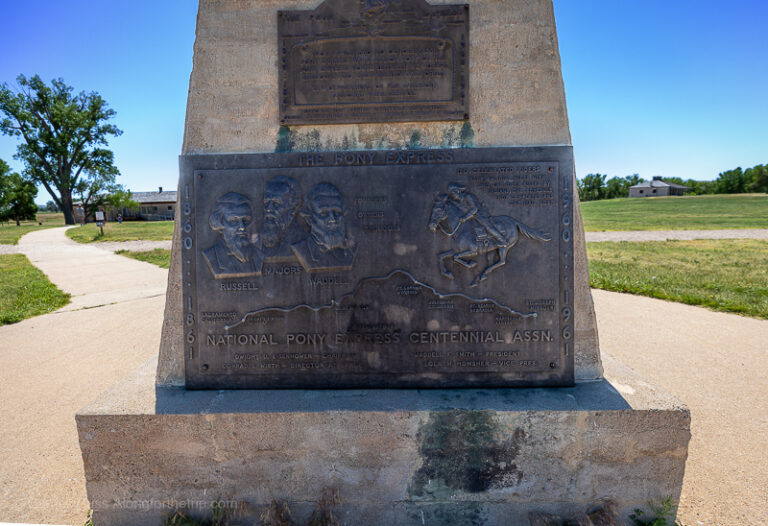
Before there was a transcontinental telegraph, the most efficient method for getting messages across the country was the Pony Express. Riders could get a piece of mail from Saint Joseph, Missouri to Sacramento, California – 2,005 miles – in just ten days. As thousands of settlers traveled west along the Oregon Trail during the mid-1800s, along with the height of the Gold Rush and the Mormon migration, the need arose to get mail quickly to the West. Although the Pony Express only existed for eighteen months in 1860-1861, it became synonymous with the Old West.
Today, you can trace the Pony Express National Historic Trail at various points throughout Missouri, Kansas, Nebraska, Colorado, Wyoming, Utah, Nevada, and California. Check here for sites and points of interest in each state. The Pony Express National Historic Trail was designated by Congress in 1992.
Sangre de Cristo National Heritage Area
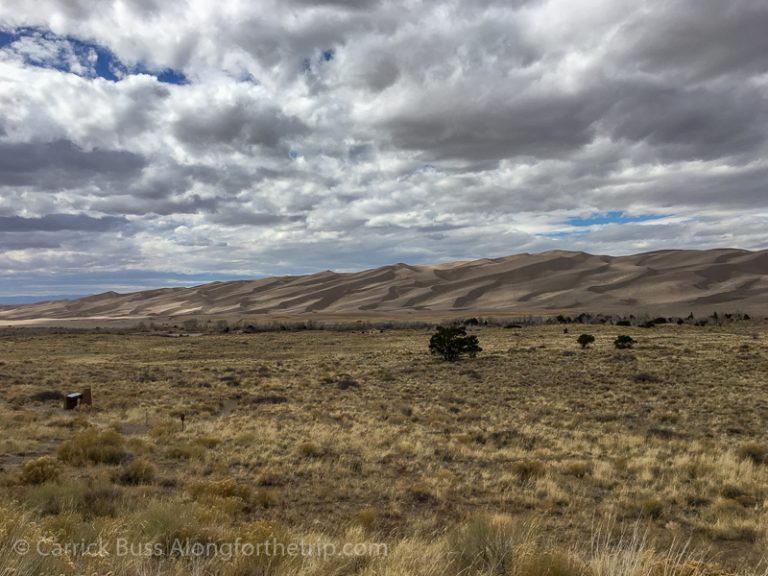
Sangre de Cristo National Heritage Area was established by Congress in 2009 and today includes about 3,000 square miles of south-central Colorado and the San Luis Valley. It includes Great Sand Dunes National Park and Preserve, as well as San Luis, Colorado’s oldest town (established in 1851).
Other sites of interest are three national wildlife refuges, a national forest, and many other state and local parks, preserves, and wilderness areas, along with the headwaters of the Rio Grande River. Cultural sites include several buildings and properties that are listed on the National Register of Historic Places, including Fort Garland where Kit Carson served as commander after the U.S. Civil War.
Santa Fe National Historic Trail

The Santa Fe National Historic Trail runs from Western Missouri to Santa Fe, New Mexico, and passes through the states of Missouri, Kansas, Oklahoma, Colorado, and New Mexico. Since 1821 the trail was a major thoroughfare for goods, but by 1880, the trail had become obsolete due to the Santa Fe Railroad line built between Kansas City and Santa Fe. With thirty sites along the trail to get a passport stamp, there are plenty of stops to learn the stories and history of this famous old-west ‘highway’.
South Park National Heritage Area
South Park National Heritage Area is located in central Colorado and protects plants and wildlife, culturally significant sites, and tells the story of Colorado’s rich mining history. The NHA includes National Wilderness Areas, 50,000 acres of wetlands, historic ranches, and old railroad depots from the days of Colorado’s gold rush.
Read more about South Park National Heritage Area here.
Good to know
Colorado national parks questions
Colorado has four national parks: Black Canyon of the Gunnison National Park, Great Sand Dunes National Park and Preserve, Mesa Verde National Park, and Rocky Mountain National Park. It also has nine other National Park Service sites.
There are 13 NPS sites in Colorado: five national monuments, four national parks, three national historic sites, and a national recreation area. Eight more NPS-affiliated sites, like Cache La Poudre River National Heritage Area, round out the list.
So far we’ve visited six of the 13 NPS sites in Colorado, including Black Canyon of the Gunnison National Park, Great Sand Dunes National Park and Preserve, and Mesa Verde National Park. We’ve also visited four of the affiliated sites.
Keep exploring
National parks in nearby states
There’s more to explore in these nearby states.