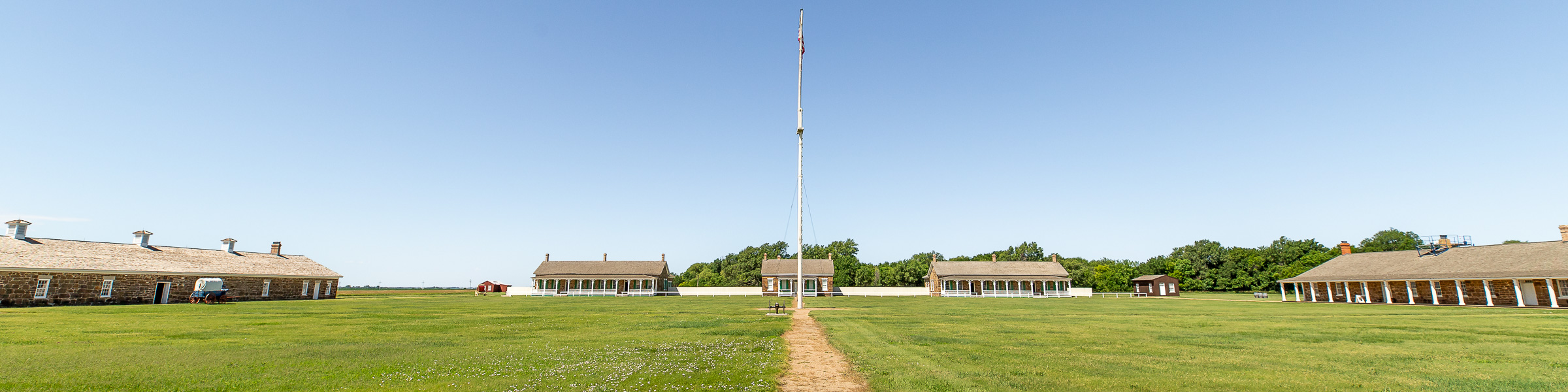
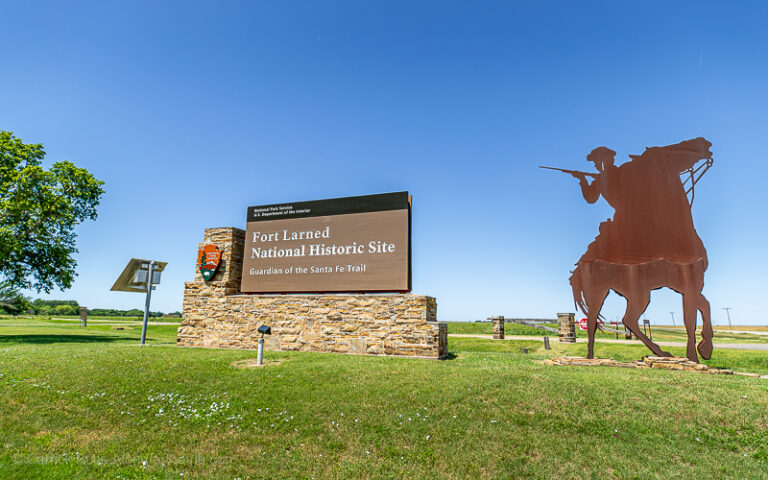
Fort Larned National Historic Site, Kansas. All photography is ours.
Home/National parks/Kansas
Kansas National Parks
America’s westward expansion is inextricably tied to Kansas. Join the adventure and #FindYourPark in Kansas.
National parks guide · Updated October 2026
Every NPS site in Kansas
5
National Park Service sites in Kansas
There are five National Park Service sites in Kansas: three national historic sites, a national historical park, and a national preserve. Tap any of them to jump to its details.
At a glance
We’ve been · 2 of 5
Affiliated sites · 6
0national parks
No national parks in Kansas yet
We’ve beenNot yet
National Park Service sites 5
Brown v. Board of Education National Historical Park
The Brown v. Board of Education National Historical Park, designated on October 26, 1992, is significant in the history of the American Civil Rights Movement. The site commemorates the landmark 1954 Supreme Court case, Brown v. Board of Education, which marked a pivotal moment in the fight against racial segregation in American public schools. The case involved the legal challenge to the segregated public school system in Topeka and ultimately led to the Court’s unanimous decision declaring “separate but equal” education facilities unconstitutional. This ruling had a profound impact on desegregating public schools across the United States and became a cornerstone in the ongoing struggle for civil rights.
The site features the Monroe Elementary School, one of the schools central to the landmark court case, preserved as a museum. Inside, visitors can experience exhibits, interactive displays, and multimedia presentations that provide a thorough understanding of the history of segregation in American education and the courageous efforts to dismantle it. The park also hosts ranger-led programs and events that delve into the civil rights movement and its impact on the nation.
The site was authorized in 1992 and signed into law by President George H. W. Bush.
Fort Larned National Historic Site
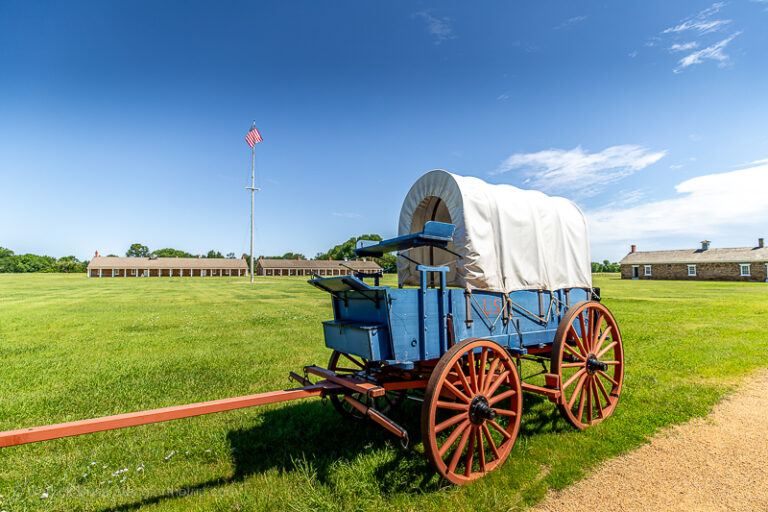
Fort Larned National Historic Site is a remarkable glimpse into the history of the American West during the mid-19th century. The site preserves the remains of Fort Larned, which was established in 1859 to protect travelers on the Santa Fe Trail and facilitate peaceful relations between settlers, Native American tribes, and the U.S. government. The fort played a significant role during the era of westward expansion, serving as a vital supply depot, military post, and diplomatic center.
Visitors can explore a range of well-preserved buildings including officers’ quarters, barracks, the commissary, and the blacksmith shop that provide a detailed perspective on life at the fort during its operation. The site features a visitor center with informative displays and artifacts related to the fort’s history, the Santa Fe Trail, and the broader context of the American West during the mid-19th century. Guided tours and living history programs offer insights into the daily routines, challenges, and interactions of soldiers, officers, and civilians who called Fort Larned home.
Additionally, visitors can enjoy walking trails, picnicking areas, and opportunities for birdwatching. Fort Larned National Historic Site was authorized on August 31, 1964 and signed into law by President Lyndon B. Johnson.
Fort Scott National Historic Site
Fort Scott National Historic Site, designated on October 19, 1978 and signed into law by Jimmy Carter, stands as a remarkable testament to the history of the American frontier and the role of military forts in westward expansion. Located in Fort Scott, Kansas, the site preserves the remains of the historic military fort established in 1842.
Visitors can explore the Fort’s numerous well-preserved historic buildings, including officers’ quarters, barracks, the commissary, and the hospital, allowing visitors to step back in time and explore the daily lives of the soldiers and civilians who lived and worked at the Fort. The site’s visitor center features exhibits and interpretive displays that provide insights into the Fort’s history, its role in westward expansion, and the challenges of maintaining order on the frontier.
The park offers guided tours and living history programs, allowing visitors to interact with costumed interpreters who reenact the daily routines and activities of the 1840s. There are also several picnic areas and hiking trails to enjoy.
Nicodemus National Historic Site
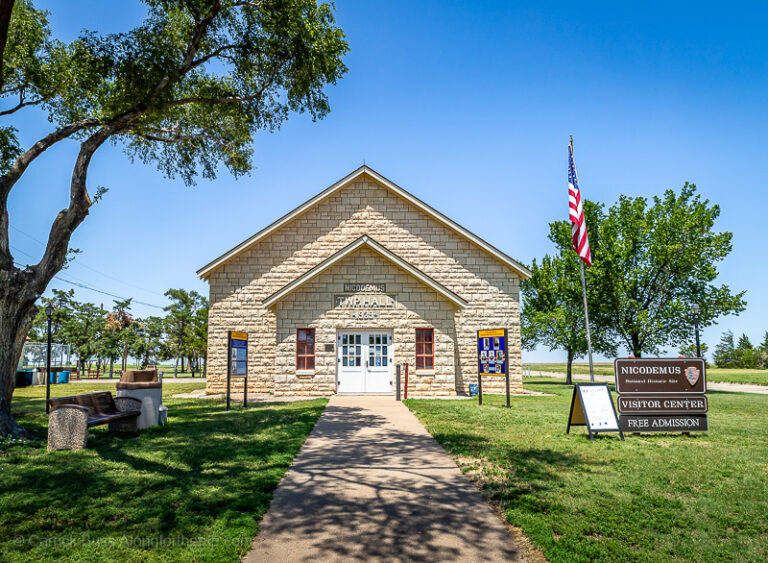
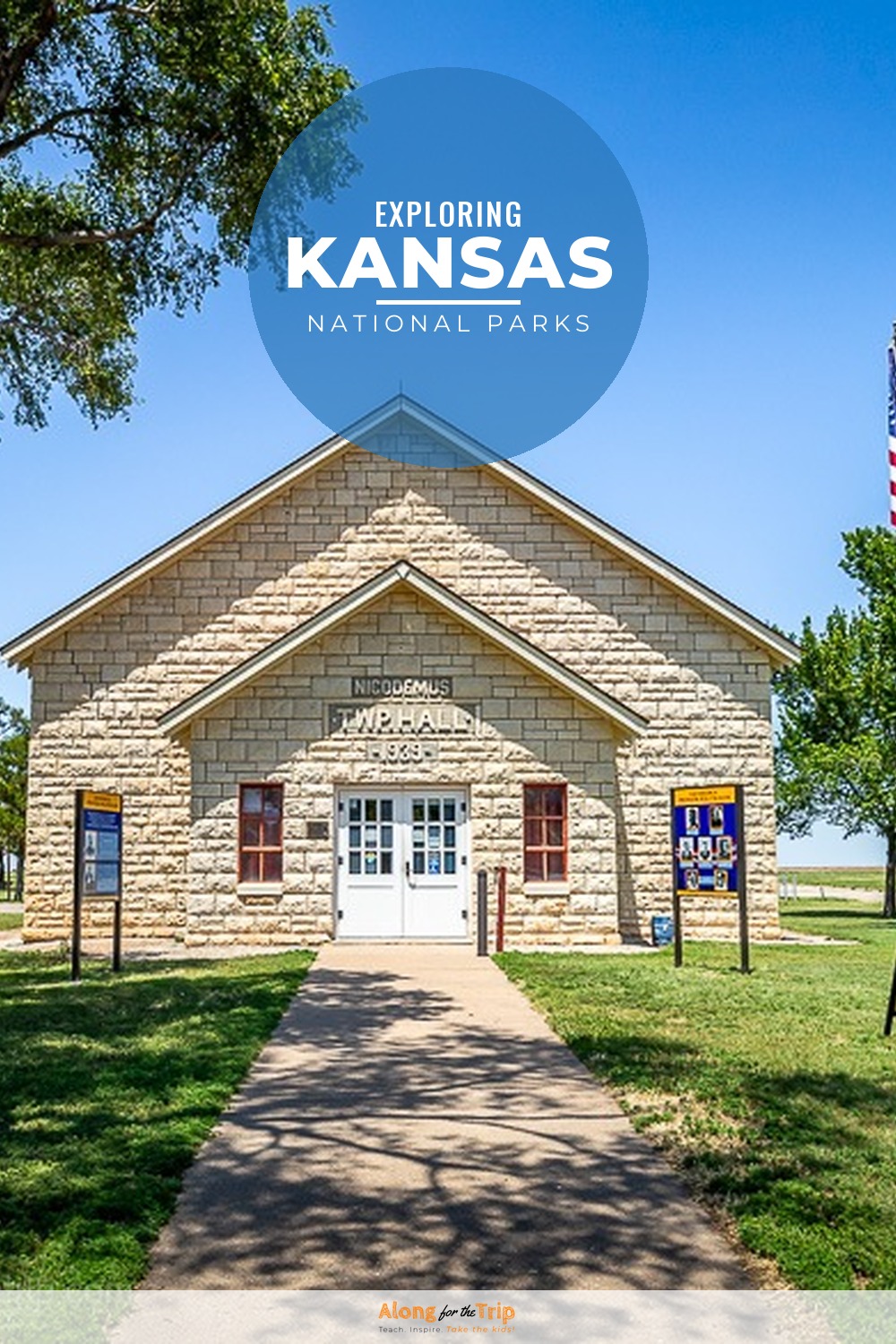
Nicodemus National Historic Site is a poignant reminder of the African American experience in the American West during the late 19th century. Located in Nicodemus, Kansas, this site preserves the history of the oldest and only remaining Black town west of the Mississippi River that was settled by African Americans during the Reconstruction Era. The town was founded by formerly enslaved individuals and free-born African Americans who sought to build new lives and communities in the post-Civil War era, away from the discrimination and racial violence they faced in the South.
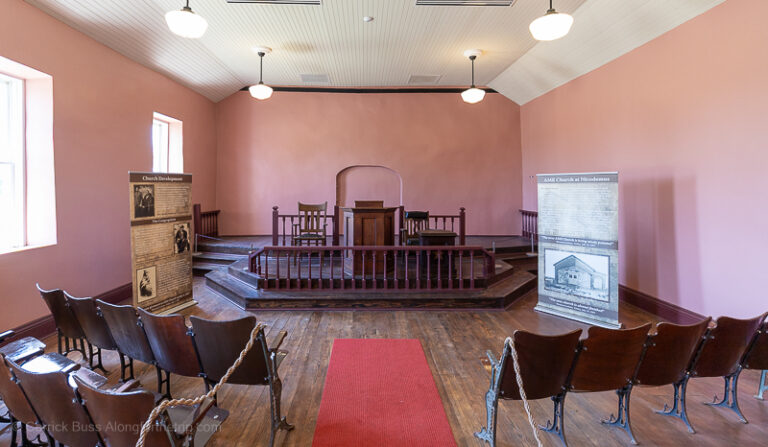
The park features well-preserved historic buildings, including the AME Church, the Nicodemus School District Number One schoolhouse, and the St. Francis Hotel. The visitor center houses exhibits, artifacts, and multimedia displays that provide context and stories related to the African American pioneers who founded this unique community. Throughout the year, the site hosts events and programs that celebrate the heritage of the Nicodemus settlers, including Juneteenth celebrations, living history reenactments, and educational activities.
Nicodemus National Historic Site was designated on November 12, 1996 and signed into law by President Bill Clinton.
Tallgrass Prairie National Preserve
Tallgrass Prairie National Preserve is located in Chase County, Kansas, and protects and showcases one of the last remaining tallgrass prairies in North America. Prior to extensive settlement and farming, these prairies covered millions of acres, and they played a vital role in the history of the American Midwest.
Visitors to Tallgrass Prairie National Preserve have the opportunity to explore this rare and ecologically significant landscape, featuring over 40 miles of hiking trails, informative exhibits, films, and educational programs. One of the highlights of the preserve is the historic Z-Bar Ranch barn, which dates back to the late 19th century. The barn showcases the region’s ranching history and the cultural heritage of the Flint Hills.
Additionally, visitors can enjoy birdwatching, wildflower viewing, and stargazing under the preserve’s dark night skies.
Tallgrass Prairie National Preserve was signed into law by Bill Clinton in 1996 and encompasses 11,000 acres.
Partners of the Park Service
NPS-affiliated sites in Kansas
These sites aren’t run by the National Park Service, but they’re part of the NPS family through national trails and heritage areas.
California National Historic Trail
The California National Historic Trail covers about 5,600 miles of routes and recounts the journey of over 250,000 people who made their way to California during the 1840s and ’50s searching for gold, prosperity, and a better life. It was the greatest mass migration in American history. The Trail runs roughly from Independence, MO to Sacramento, CA, and spans ten states – California, Colorado, Idaho, Kansas, Missouri, Nebraska, Nevada, Oregon, Utah, and Wyoming.
Passport sites and interpretive centers exist along the route in several states. A modern-day auto route is also available for those wanting to trace the trail by car.
Freedom’s Frontier National Heritage Area
Freedom’s Frontier National Heritage Area, designated in 2006 by President George W. Bush, is a historical region that highlights the struggles and achievements in the fight for freedom and civil rights throughout American history. The region’s history is deeply rooted in the tumultuous events leading up to the American Civil War and its lasting impact on the nation. It also played a significant role in the civil rights movement of the 20th century.
The heritage area encompasses a network of historic sites, museums, and interpretive centers that offer insights into the pivotal moments and figures in the fight for freedom. Thematic trails, such as the John Brown Freedom Trail, lead visitors to significant sites associated with the abolitionist movement. The region hosts cultural events, festivals, and reenactments that bring history to life and highlight the area’s role in the ongoing quest for civil rights.
Lewis & Clark National Historic Trail
The Lewis & Clark National Historic Trail marks the historic journey by Meriwether Lewis and William Clark along 4,900 miles of wilderness from Pennsylvania all the way to the mouth of the Columbia River in Oregon. The Trail connects 16 states – Pennsylvania, Ohio, West Virginia, Kentucky, Indiana, Illinois, Missouri, Kansas, Nebraska, Iowa, South Dakota, North Dakota, Montana, Idaho, Washington, and Oregon – and includes museums, landmarks, exhibits, and Visitor Centers along the route. For a complete list of markers and things to see and do, click here.
Oregon National Historic Trail
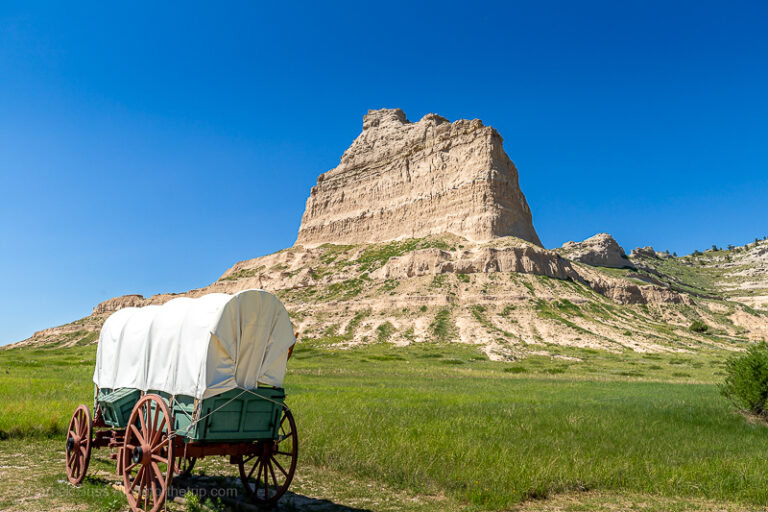
Beginning in Independence, Missouri and ending some 2,170 miles later in Oregon City, Oregon, and passing through seven states along the way, the Oregon Trail was the passage west for many settlers looking for a new life. The Oregon National Historic Trail marks the stories, landmarks, and landscapes of this incredible 4-month long journey made during the mid-1800s.
Today, there are several ways to experience the trail, with the most popular being by car. Maps showing various markers in each state are available to help you plan your journey. Of course, you don’t have to travel the entire 2,170 miles to enjoy the trail, but for the purists who like to collect NPS Passport Stamps, you will find them at various Visitor Centers along the route here:
– Hagerman Fossil Beds National Monument Visitor Center – Idaho- Craters of the Moon National Monument & Preserve – Idaho- Three Island Crossing State Park – Idaho- Shawnee Indian Mission State Historic Site – Kansas- Hollenberg Pony Express Station State Historic Site – Kansas- Marysville Chamber of Commerce & Convention & Visitors Bureau – Kansas- Harry S. Truman National Historic Site – Missouri– Trailside Center – Missouri- Alexander Majors House Museum – Missouri- National Frontier Trails Museum – Missouri- Scotts Bluff National Monument – Nebraska– Homestead National Historical Park – Nebraska– Flagstaff Hill/National Historic Oregon Trail Interpretive Center – Oregon- McLoughlin House – Oregon- Fort Vancouver National Historic Site – Washington– National Historic Trails Interpretive Center – Wyoming- Martin’s Cove – Wyoming- Fort Bridger State Historic Site – Wyoming-Fossil Butte National Monument – Wyoming
Pony Express National Historic Trail
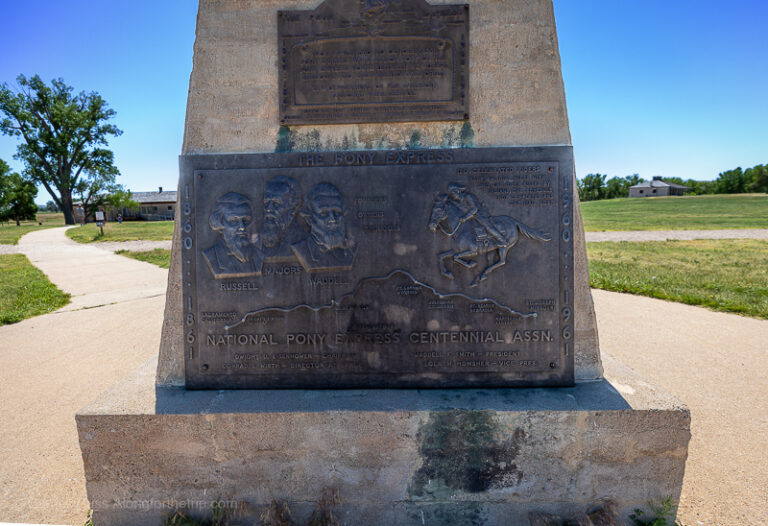
Before there was the telegraph, the most efficient method for getting messages across the country was the Pony Express. Riders could get a piece of mail nearly 2,000 miles from Saint Joseph, Missouri to Sacramento, California in just ten days. As thousands of settlers traveled west along the Oregon Trail during the mid-1800s, along with the height of the Gold Rush and the Mormon migration, the need arose to get mail quickly to the West. Although the Pony Express only existed for eighteen months in 1860-1861, it became synonymous with the Old West.
Today, you can trace the Pony Express National Historic Trail at various points throughout Missouri, Kansas, Nebraska, Colorado, Wyoming, Utah, Nevada, and California. Check here for sites and points of interest in each state. The Pony Express National Historic Trail was designated by Congress in 1992.
Santa Fe National Historic Trail

The Santa Fe National Historic Trail runs from Western Missouri to Santa Fe, New Mexico, and passes through the states of Missouri, Kansas, Oklahoma, Colorado, and New Mexico. Since 1821 the trail was a major thoroughfare for goods, but by 1880, the trail had become obsolete due to the Santa Fe Railroad line built between Kansas City and Santa Fe. With thirty sites along the trail to get a passport stamp, there are plenty of stops to learn the stories and history of this famous old-west ‘highway’.
Good to know
Kansas national parks questions
No. Kansas doesn’t have a national park, but it does have five National Park Service sites, including Brown v. Board of Education National Historical Park, Fort Larned National Historic Site, and Fort Scott National Historic Site.
There are five NPS sites in Kansas: three national historic sites, a national historical park, and a national preserve. Six more NPS-affiliated sites, like California National Historic Trail, round out the list.
So far we’ve visited two of the five NPS sites in Kansas, including Fort Larned National Historic Site and Nicodemus National Historic Site. We’ve also visited four of the affiliated sites.
Keep exploring
National parks in nearby states
There’s more to explore in these nearby states.